.svg)

.svg)
Download Brouchure
%202.svg)
Oops! Something went wrong while submitting the form.
%201.svg)

Demand forecasting in the fashion and beauty industry goes far beyond simply guessing how much will sell next season. Trends shift rapidly, product lifecycles are short, and consumer reactions are inherently difficult to predict—these are defining characteristics of the industry. When forecast accuracy slips, the consequences are immediate: excess inventory, forced markdowns, stockouts, and lost sales opportunities. This article examines the structural challenges that fashion and beauty companies face in demand forecasting and provides a step-by-step guide to how AI-powered forecasting can reduce inventory, production, and procurement risk in practice.
The fashion and beauty industries are navigating three converging forces simultaneously: a low-growth macro environment, shifting consumer behavior, and the rapid adoption of AI technology. As these forces overlap, legacy forecasting methods are increasingly struggling to keep pace with market volatility.
According to The State of Fashion 2026, a joint report by McKinsey and Business of Fashion, the global fashion industry is expected to remain in the low single-digit growth range through 2026. Forty-six percent of fashion executives anticipate worsening industry conditions in 2026—an 8 percentage point increase from the previous year.
For demand planners, these indicators demand close attention. Consumers are tightening their wallets and increasingly prioritizing value-driven purchases. Simply extrapolating past growth curves into the future no longer delivers reliable forecasts. Add rising tariffs and supply chain instability to the equation, and shifting cost structures make price-based demand forecasting significantly more complex.
The beauty market is undergoing a similar inflection. McKinsey's State of Beauty 2025 report projects that global beauty industry growth will decelerate from 7% annually between 2022 and 2024 to around 5% annually through 2030. The global beauty market was valued at approximately $441 billion in 2024, and the report describes emerging "cooling signals" across the sector.
What makes beauty demand forecasting particularly challenging is that demand patterns vary dramatically across categories. Fragrance is growing at 8% annually, while skincare faces mounting price sensitivity and color cosmetics experience sharp spikes and drops driven by trends. Even within the same industry, the forces driving demand differ by category—making granularity in forecasting all the more critical.
Fashion demand forecasting is widely considered more difficult than in most other manufacturing or retail sectors. The reasons are structural: short product lifecycles, fast-moving trends, a high share of new product introductions, and complex SKU matrices.
Fashion brands launch entirely new designs every season. These new products have zero sales history, so demand must be estimated by weighing a combination of attributes—colorway, fit, fabrication, pattern, price point, and brand positioning. But when initial orders rely on qualitative judgment without quantitative backing, the risk of overstock or stockout begins at the very first purchase order. In fact, 44% of fashion retailers report carrying excess inventory, and unsold merchandise accounts for roughly 17–20% of total stock, according to industry research.
A single design, when multiplied across sizes (XS–XXL), colorways (5–10 options), channels (DTC e-commerce, department stores, outlets, wholesale partners), and regions (domestic metros, secondary cities, international), can easily balloon into hundreds or even thousands of SKUs. Demand for a Black M is fundamentally different from demand for a Red XS, and once you factor in local trade area characteristics, climate variations, and regional consumer preferences, forecast complexity grows exponentially. When the SKU count exceeds 1,000, it becomes physically impractical for a single planner to accurately forecast demand and determine order quantities across every combination.
Social media, celebrity endorsements, short-form video content, and influencer recommendations can spike demand for a specific product overnight—but that momentum can cool within days.
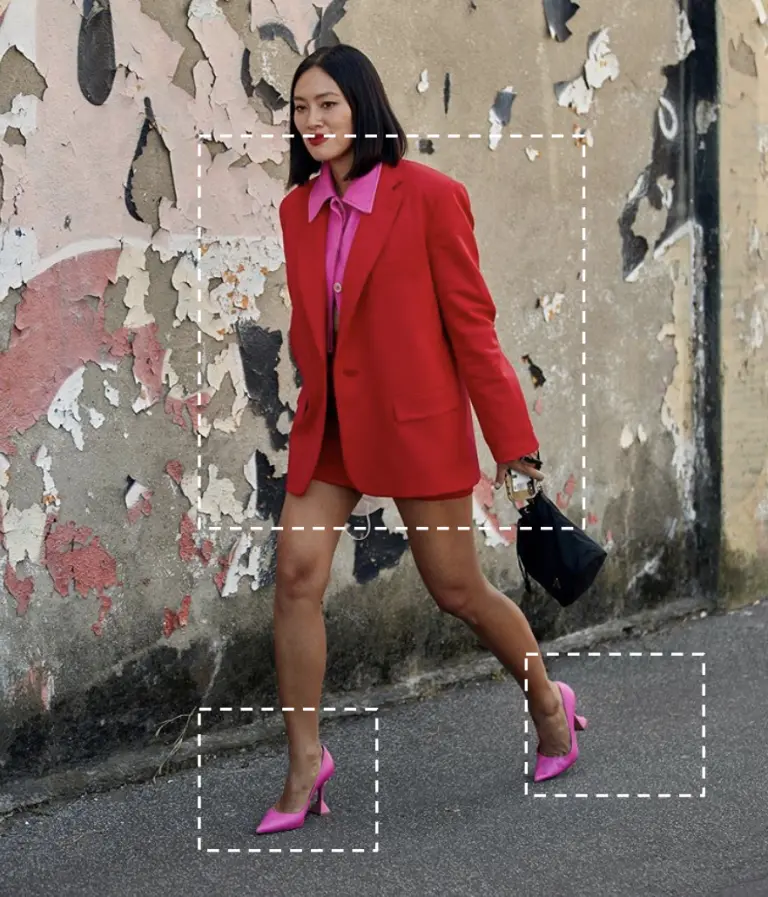
Paris-based AI startup Heuritech scans millions of images across social media to identify over 2,000 fashion details and 500 colors, offering trend predictions up to 24 months out. The fact that brands like Louis Vuitton, Dior, and Adidas rely on this service underscores that capturing trend signals early and incorporating them into demand planning is a critical priority—even for global players.
Fashion has inherently high return rates due to size and fit issues. When returned merchandise re-enters sellable inventory, it introduces noise into demand data. Factor in end-of-season markdowns, and full-price demand gets blended with promotional demand, blurring the baseline for next season's forecast.
The beauty industry faces a different set of forecasting challenges than fashion. While repeat purchase rates are higher, new product launch cycles are rapid, influencer and social media dynamics can swing demand dramatically, and purchase behavior varies significantly across channels.
Many beauty brands rely heavily on a handful of hero SKUs for a disproportionate share of revenue. The challenge is twofold: predicting how long a hero product's demand will sustain, and identifying which of the new products launching each quarter might become the next breakout. Most companies need 2–4 weeks of post-launch sell-through data before any meaningful signal emerges, but by then, initial quantities are often already proven too high or too low.
Beauty may appear to be a single industry, but the forces driving demand are fundamentally different across categories.
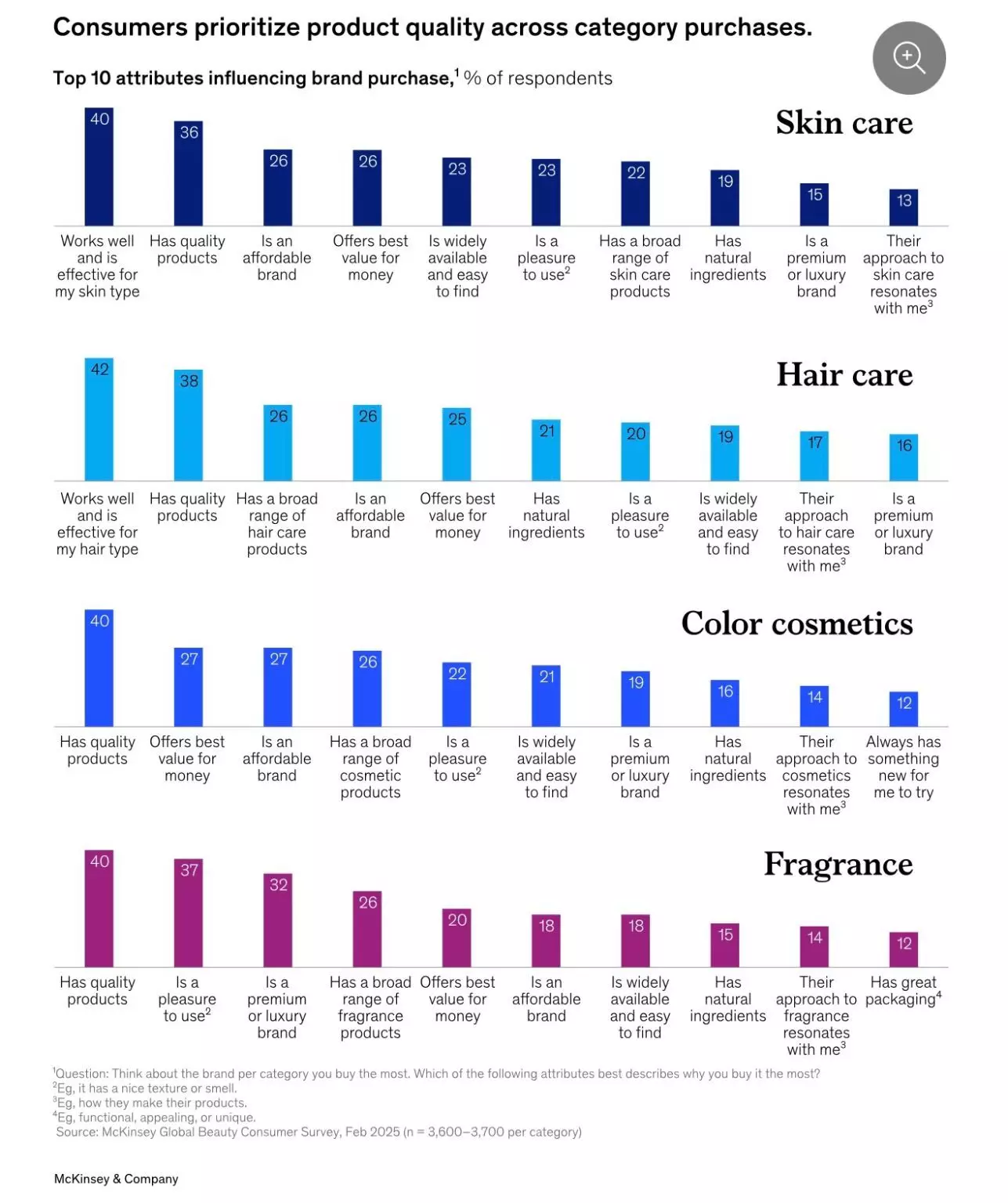
The replenishment-cycle-based forecasting logic for skincare and the trend-driven forecasting logic for color cosmetics require fundamentally different approaches. A single model applied across all categories inevitably produces wider forecast error.
A product that sells well at Olive Young may underperform in department stores—even under the same brand. On a DTC website, search volume and review counts serve as leading demand indicators, while in brick-and-mortar stores, shelf placement and tester availability are the primary demand drivers. In live commerce, an entire day's inventory can sell out in a single broadcast. Beauty retail also runs a high volume of promotions, and bundled offers like buy-one-get-one or buy-one-get-two create layered promotional structures that add further complexity to demand data.
When a major influencer features a product, search volume and sales can surge by orders of magnitude in a single day. The core challenge is determining whether this spike represents a temporary blip or the beginning of a sustained trend. Overestimating viral demand leads to excess inventory; underestimating it leads to stockouts.
As noted earlier, consumer perception of mass-market product quality has shifted. Budget-friendly beauty lines are gaining traction, and "dupe" culture is now mainstream. Demand migration between premium and mass-market tiers is becoming more frequent. Unless demand forecasting accounts for price sensitivity and substitution effects, inventory imbalances will widen.
Let's take a closer look at why the forecasting approaches still widely used across fashion and beauty are hitting their limits.
The common thread across these approaches is a "backward-looking" structure that uses the past to estimate the future. In industries where historical data is a reliable proxy for what comes next, this can work. But in fashion and beauty—where trends move fast and external variables can dramatically shift demand—relying on historical data alone is becoming insufficient in an increasing number of scenarios.
This is precisely why interest in AI-powered demand forecasting is accelerating across the fashion and beauty sector. Breaking through the limitations of legacy methods requires expanding data inputs, shortening forecast cycles, and fundamentally rethinking the architecture of forecasting models.
To improve demand forecast accuracy in fashion and beauty, planners need to look beyond sales data alone. The key is integrating diverse demand signals into a unified forecasting framework.
Here are the data types that practitioners can leverage for demand forecasting:
A critical consideration here is revisiting the assumption that "sales equals demand." During stockout periods, demand exists but no sales are recorded. During promotions, sales exceed true underlying demand. To get an accurate picture of true demand, sales data must be adjusted by incorporating stock availability, promotional calendars, and out-of-stock history.
AI-powered demand forecasting is drawing attention across fashion and beauty because the technology is demonstrating a real ability to overcome the structural limitations of legacy methods.
The global AI in fashion market is projected to grow from $1.17 billion in 2025 at a CAGR of 38.85%, reaching $16.16 billion by 2033, with trend forecasting and demand planning among the primary growth drivers. It is no coincidence that in McKinsey's State of Fashion 2026 report, fashion executives ranked AI as the "number-one opportunity"—ahead of product differentiation and sustainability.
Real-world results are emerging. L'Oréal redesigned its demand forecasting process through its "Demand Sensing" program, combining data, consumer insights, and machine learning, and has positioned it as a cornerstone of its supply chain digital transformation. Combined with the Heuritech trend forecasting example discussed earlier, AI-powered demand forecasting is moving beyond pilot programs at a few industry leaders and establishing itself as a production-grade operational tool.
So what specific challenges in fashion and beauty does an AI demand forecasting solution address, and how? Let's examine this through the lens of ImpactiveAI's Deepflow.
As outlined above, demand forecasting in fashion and beauty is structurally more complex than in other industries—driven by a high share of new product introductions, fast-moving trends, and intricate SKU matrices. In this environment, practitioners need more than raw forecast numbers; they need tools that connect predictions to interpretation and actionable execution.
ImpactiveAI's Deepflow leverages over 224 machine learning models and 75 AI patents to deliver precise SKU-level sales and shipment forecasts. The platform's AI learns from large, diverse product assortments and rapidly shifting consumer trend variables, helping fashion and beauty companies reduce both overstock incidence and stockout risk by an average of over 30%.
Fashion operates on a clearly segmented product lifecycle: season transitions, collection rotations, and sale periods. Deepflow directly incorporates these fashion- and beauty-specific seasonal patterns into its forecasting models. It distinguishes between the early-season acceleration phase, mid-season plateau, and late-season deceleration, calculating optimal inventory levels for each stage. By integrating external consumer signals such as search trends and social media mention volume, the model also captures intra-season demand fluctuations.
A real-world example illustrates how this works. Global lifestyle content company W tested this framework with Deepflow. Company W's product portfolio shared key characteristics with fashion: rather than selling steadily over long periods, demand concentrated sharply around specific launch windows, and product compositions and selling periods varied—making straightforward comparisons to prior products difficult. Initial order quantities effectively determined the line between inventory risk and lost sales opportunity.
Deepflow addressed this by standardizing the seasonal lifecycle. Even though each product had a different total selling window, the platform normalized sales curves into three stages—Launch (initial post-release), Mid (middle selling period), and Deadline (final phase before close-out)—creating a unified forecasting structure. This approach enables meaningful comparisons and predictions across both short-run and longer-run products within a common framework.
In a blind test conducted on Company W's key new-product SKUs, Deepflow achieved 87–94% accuracy on the highest-volume product lines. Despite these being entirely new products with no sales history, the forecast delivered confidence levels sufficient for first-order decision-making. This case demonstrates that lifecycle-based forecasting can deliver operationally meaningful results in environments where new product share is high and selling windows are short—precisely the conditions that define fashion and beauty.
In fashion and beauty—where brands must launch new designs every season—estimating initial demand for products with zero sales history is one of the hardest problems in the field.
Deepflow tackles this by learning from each product's intrinsic attributes. It analyzes key characteristics such as fabrication, design elements, size range, colorway, and price tier against historically similar products, then combines this with the latest market trend data to estimate an initial demand range at the time of launch. This enables merchandisers and demand planners to base their order quantities on a data-driven starting point rather than relying solely on experience and intuition.
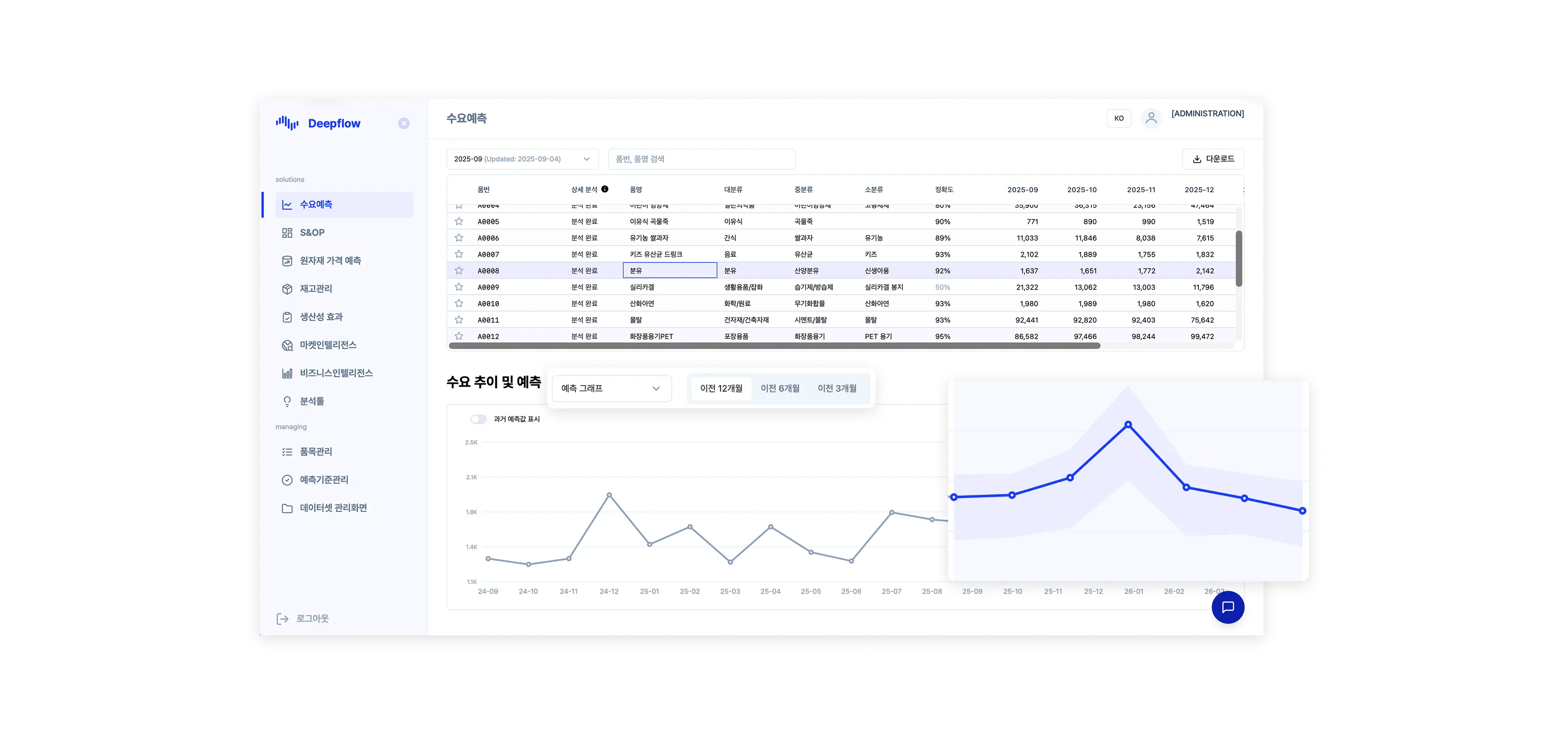
Fashion and beauty products sell simultaneously across multiple channels—DTC e-commerce, department stores, outlets, wholesale partners, and live commerce—each with distinct demand patterns. Deepflow supports daily, weekly, and monthly AI models calibrated to each product's production and distribution lead times, delivering channel-specific forecasts tailored to each selling environment. Because the model continuously updates with the latest data, it can rapidly recalibrate when demand in a specific channel shifts unexpectedly mid-season.
For fashion and beauty brands operating across multiple channels, the precision of inter-channel inventory allocation directly impacts overall inventory efficiency. Deepflow calculates optimized baseline demand by region and channel, helping prevent unnecessary overproduction and reducing logistics costs caused by cross-channel inventory imbalances.
One of the most time-consuming tasks for demand planning teams in fashion and beauty is not reviewing the forecast itself—it's analyzing the rationale behind each number and developing department-specific action plans. Deepflow uses generative AI to automatically produce reports covering historical sell-through trend analysis and seasonal pattern breakdowns, forward-looking demand projections with supporting rationale, and tailored execution strategies for sales, marketing, and supply chain teams.
For example, when a specific SKU's forecast deviates significantly from the prior year, the system identifies whether the shift is driven by a lifecycle phase transition, a trend change, or a promotional effect—and then recommends specific actions for each department. Practitioners spend less time on data interpretation and report creation, freeing them to focus on strategic decision-making.

Taking this a step further, Deepflow's AI assistant remembers each planner's workflow context and provides personalized decision support. This is not a generic chatbot—it learns which SKUs each planner monitors regularly, which KPIs they prioritize, and the outcomes of their past decisions, enabling it to surface the most critical issues for each individual first thing in the morning.
This capability is especially valuable in fashion and beauty because the pace and complexity of decision-making are relentless throughout the season. In the early weeks, planners need to quickly gauge new product sell-through and decide whether to trigger replenishment orders. Mid-season, they must identify understocked and overstocked SKUs and determine how to reallocate across locations. Late in the season, the focus shifts to timing markdowns and setting discount levels.
The AI assistant organizes the right SKUs and recommended actions for each stage, tailored to each planner's specific situation. This eliminates the burden of manually reviewing hundreds of SKUs each week and lets planners focus on the decisions that truly require their judgment. Because the system accumulates each planner's decision history and outcomes over time, its recommendations become increasingly aligned with individual working styles and criteria.
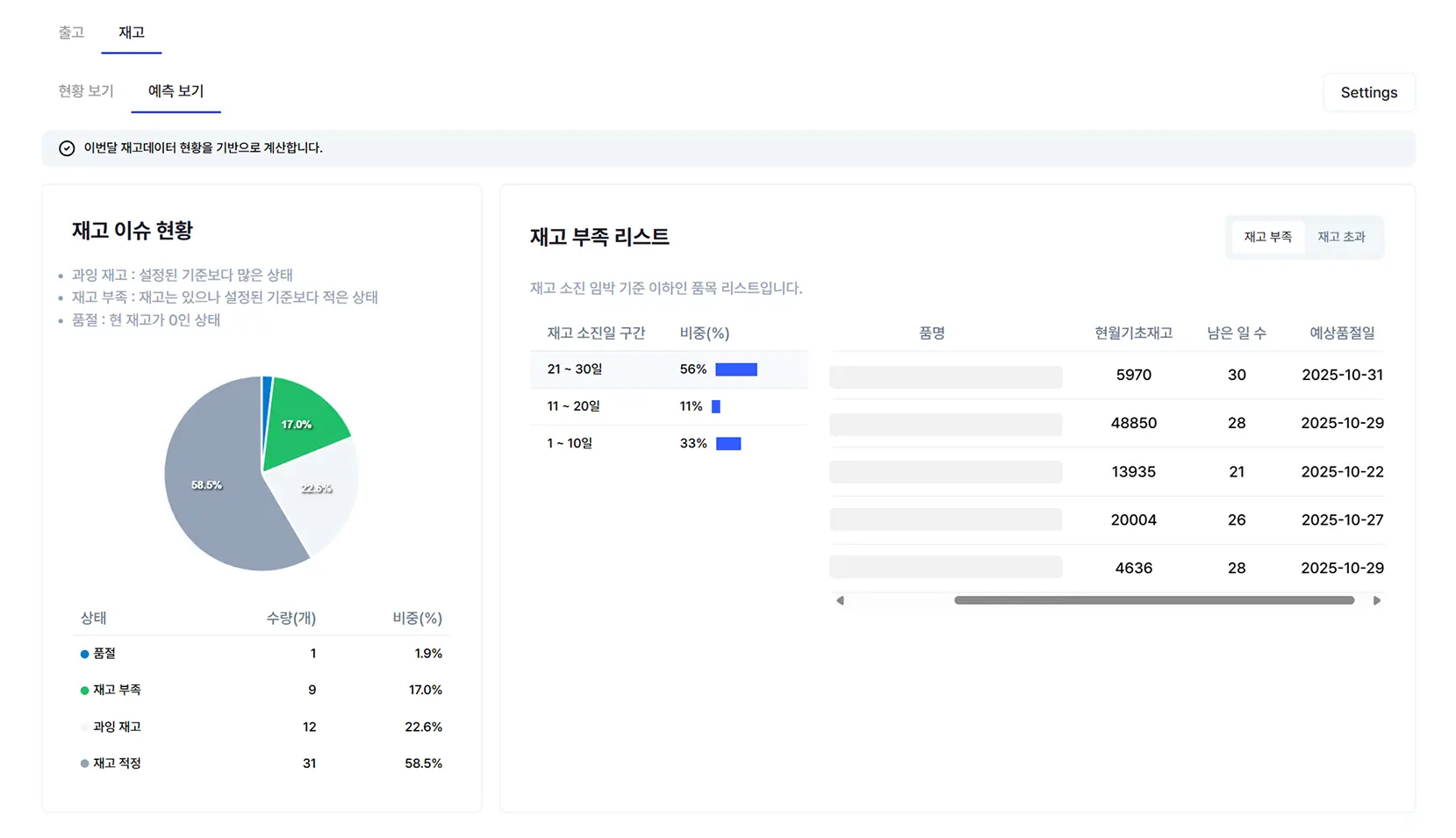
In fashion and beauty, end-of-season overstock and hero product stockouts are among the most common inventory risks. Deepflow's BI (Business Intelligence) dashboards highlight SKUs projected to face shortages or excess, providing at-a-glance visibility. The system automatically calculates days of supply and optimal production quantities based on projected sell-through trajectories. By visualizing data flows through multiple BI dashboards, planners can instantly assess current conditions and respond proactively to inventory issues—without manual data manipulation.
While fashion and beauty can be grouped together as "industries where demand forecasting is hard," the actual forecasting strategies need to be designed separately.
In fashion, the central question is: "How much of this design will sell this season?" In beauty, the central question is: "When, where, and how much of this product will sell again?" Because the time horizon and spatial dimensions of the forecast differ, it is essential to configure model design and data inputs differently—even when using the same AI forecasting platform.
Adopting an AI demand forecasting tool does not automatically guarantee improved accuracy. What matters more than the tool itself is the data foundation, organizational processes, and the link between forecast output and operational execution.
Here are key areas to assess before implementation:
The most critical factor is the connection between forecast and execution. Even the most accurate predictions have limited practical value if they are not reflected in actual order quantities or production schedules. Demand forecasting should not be treated as a standalone analytical exercise; it works best when designed as the central axis of an operating strategy that connects production, procurement, inventory, and marketing.
Demand forecasting in fashion and beauty is not just a planning function—it is an operating strategy that connects production lead times, order quantities, inventory allocation, promotion timing, and customer experience.
There are three reasons why this transformation deserves attention now.
The bottom line for fashion and beauty demand forecasting comes down to one fundamental shift: moving from forecasts based solely on sales volume to forecasts that integrate the full spectrum of demand signals. The companies that make this transition first will be better positioned to manage inventory risk and protect margins heading into the next season.
Q. What advantages does AI offer over traditional demand forecasting methods in fashion?
AI combines historical sales data with external variables—search trends, social media signals, weather, and promotional calendars—resulting in higher accuracy than year-over-year benchmarking, especially for new product launches and sudden trend shifts. In environments with thousands of SKUs, automatically selecting the optimal model for each item is a task that is virtually impossible to perform manually.
Q. Why is demand forecasting particularly difficult in the beauty industry?
The demand drivers differ fundamentally across beauty categories, influencer virality can cause overnight demand swings, and promotional structures vary in complexity across channels. Forecasting skincare replenishment cycles and predicting color cosmetics trend trajectories require entirely different approaches.
Q. What should companies prepare before implementing a demand forecasting system?
The first step is verifying that SKU-level sales data is being captured at the daily level and that returns, promotions, and out-of-stock periods are clearly distinguishable in the data. Introducing an AI tool on top of high-quality data is the prerequisite for realizing meaningful accuracy improvements.
Q. How is Deepflow used in the fashion and beauty industry?
Deepflow delivers SKU-level customized demand forecasts powered by over 224 AI models. Its BI dashboards provide proactive visibility into shortage and excess inventory at the SKU level. LLM-powered analysis reports automatically generate forecast rationale and department-specific action plans, reducing report preparation time and enabling practitioners to focus on strategic decision-making.
.svg)

.svg)

.svg)




%201.svg)
%202.svg)


