.svg)

.svg)
%202.svg)
%201.svg)
Kickstart Your SMB's Digital Transformation with Korea's 2026 Cloud Voucher
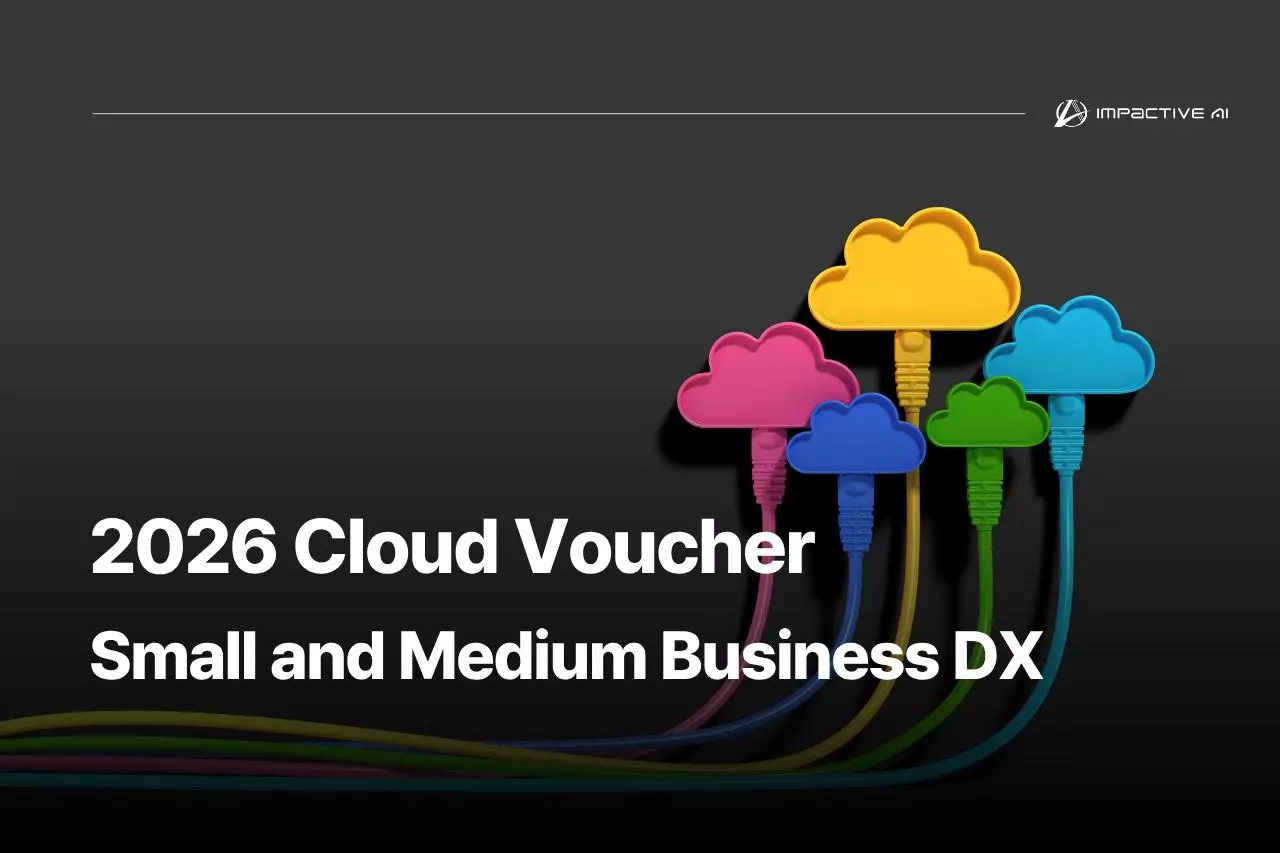
Overview of the 2026 Cloud Service Expansion Program
The "Cloud Service Expansion Program," led by Korea's Ministry of Science and ICT and the National IT Industry Promotion Agency (NIPA), is a government-backed initiative that directly supports digital transformation (DX) for domestic SMEs. It goes beyond simply subsidizing software subscription fees — the program's core value lies in combining expert consulting with cloud service adoption to help companies build data-driven management systems.
A wide range of SaaS solutions — including ERP, CRM, and collaboration tools — are already being deployed at Korean SMEs through this program. In 2026, applicants that select services with embedded AI capabilities receive preferential treatment during the evaluation process, creating an especially favorable environment for companies considering AI-powered solutions.
How Much Funding Can SMEs Receive?
The total funding cap per company is 69.1 million KRW, split across two categories.
Cost-sharing ratios are structured by company size as follows.
Advanced consulting is not optional — it's a mandatory step. Companies must complete the consulting phase and establish a strategy before cloud service usage begins. The consulting process analyzes the company's operational environment and develops a cloud-based data migration and utilization roadmap. Only when this groundwork is thorough can the subsequent service subscription investment translate into tangible results.
Types of Cloud Services Eligible Under the Program
Cloud services supported through this program fall into three categories: SaaS, IaaS, and PaaS.
SaaS (Software as a Service) refers to subscription-based software accessed via the internet — think collaboration tools and accounting software — offering rapid deployment and minimal maintenance overhead. The vast majority of SME adoption cases under this program fall into this category, with organizational management and communication tools representing the largest share. IaaS (Infrastructure as a Service) replaces physical infrastructure like servers and storage with cloud-based alternatives. PaaS (Platform as a Service) provides a ready-made software development environment.
In recent years, growing interest has centered on AI-powered SaaS solutions that support supply chain management (SCM) functions — from AI demand forecasting and inventory optimization to raw material price analysis. For industries with frequent demand fluctuations, such as manufacturing, retail, and food, adopting these solutions can directly translate into meaningful cost savings.
Deepflow: The AI Demand Forecasting Cloud Service Drawing Attention
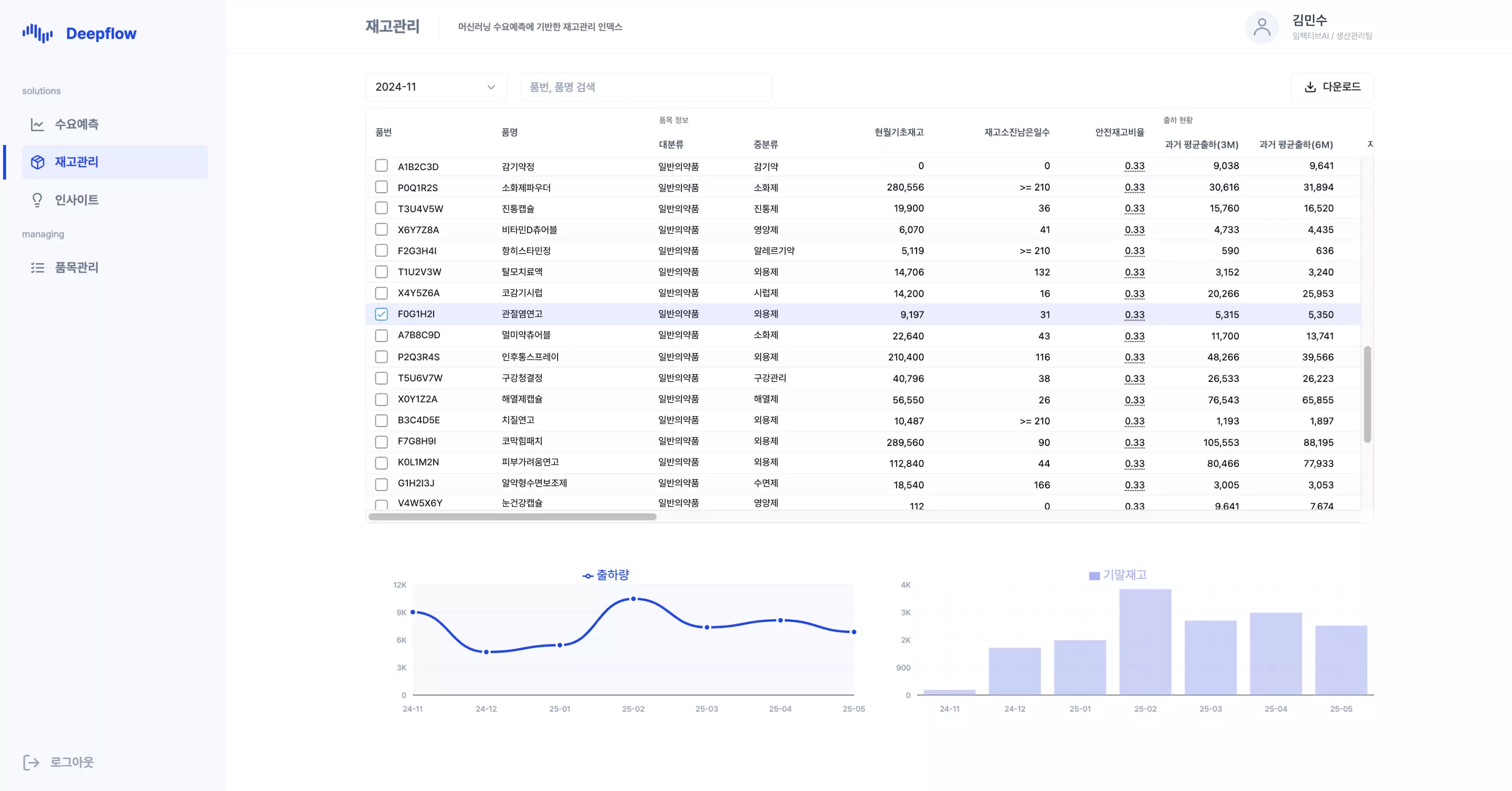
ImpactiveAI's Deepflow is a SaaS solution purpose-built for AI demand forecasting. Powered by over 224 machine learning and deep learning models and backed by 72 patented technologies, Deepflow delivers highly accurate product-level sales and shipment volume forecasts and is already in use across manufacturing, retail, food, chemicals, and pharmaceuticals.
Deepflow's LLM-powered dashboard goes a step further than simply displaying forecast numbers — it auto-generates tailored action plans that practitioners in Sales, Marketing, and SCM can immediately put to use. Reports covering historical sales trend analysis, seasonal pattern breakdowns, forward-looking demand outlook with supporting rationale, and department-specific execution strategies help teams reclaim the hours previously spent on data interpretation and report writing, allowing them to focus on strategic decision-making. For companies looking to integrate cloud and AI into their actual workflows — not just check the "digital transformation" box — this is the capability that matters most.
Deepflow is a registered supply-side solution within the Cloud Service Expansion Program. Given that selecting services with AI functionality earns preferential evaluation treatment, combining this program with Deepflow can be a practical choice for companies looking to elevate their demand forecasting capabilities.
2026 Application Timeline and Required Documents
Application Period and Key Dates
How to apply: Submit online through the Cloud Service Support Portal (https://www.cloudsup.or.kr).
Required Documents (7 items)
The application package consists of the demand-side company application form, cloud service utilization plan, personal information collection and usage consent form, business registration certificate, SME certification (validity must be confirmed as of the application date), national and local tax clearance certificates, and the SME support program integrated management system consent form.
Pre-Application Checklist
Simultaneous participation in similar government support programs — such as the AX Voucher or AI Voucher — is not permitted, so companies currently enrolled in other programs should verify eligibility in advance. Selected companies are obligated to cooperate with performance surveys for three years following selection (typically conducted October through December); non-compliance may result in penalties for future program participation. Companies whose representative is age 39 or younger (born on or after March 1, 1986) receive a 1-point bonus in the evaluation.
Final Thoughts
Korea's 2026 Cloud Service Expansion Program offers SMEs the opportunity to rapidly adopt proven SaaS solutions with minimal upfront investment. With clearer preferential evaluation criteria for AI-powered solutions this year, companies exploring data-driven decision-making upgrades — whether in demand forecasting, inventory optimization, or beyond — have strong reason to take advantage of this program.
Companies interested in adopting Deepflow through the Cloud Voucher can reach ImpactiveAI at sales@impactive-ai.com.
.svg)


.svg)









%201.svg)
%202.svg)


.svg)