.svg)

.svg)
%202.svg)
%201.svg)
Inventory Management Software in 2026: Demand Forecasting and Inventory Optimization
The day the monthly purchase order gets finalized looks the same in most companies. You open the ERP to check on-hand quantities, pull a separate list of SKUs about to run out, and ask the sales team — again — about next month's promotion calendar. All of those numbers end up in a single spreadsheet, where someone adjusts the order quantities by hand using last month's sales and their own gut feel.
The problem is that no matter how carefully you run this routine, the result always tips to one side. The product you expected to sell piles up in the warehouse, while the one you thought was well covered stocks out mid-month. Inventory management software tells you exactly how many units you have right now — but "how much will sell next month" and "how much should we order today" still land on the planner's desk.
In 2026, inventory management doesn't end with counting current stock. It also has to cover forecasting next month's demand and deciding how much inventory to hold in which warehouse.
What to Look for in Inventory Management Software in 2026
If you are choosing inventory management software or a broader solution in 2026, don't stop at inbound/outbound records and barcode features. Look at three more things:
- Can it predict how much will sell? (AI demand forecasting)
- Based on that forecast, does it recommend how much to order and when? (inventory optimization and automated replenishment)
- Does it connect to the data in your ERP, POS, e-commerce storefronts, and WMS? (integrations)
If simple inbound/outbound tracking is the goal, a Korean-market inventory tool such as BoxHero or Ecount ERP is worth considering. If you want accounting, purchasing, and inventory tied into one system, look at an ERP such as NetSuite, SAP, or Odoo. And if you already have systems like these but forecast accuracy and reorder decisions are the weak point, the better move is to evaluate an AI demand forecasting and inventory optimization solution such as Deepflow that layers on top of what you have.
Inventory Management Software vs. ERP, WMS, and AI Demand Forecasting
In its 2026 supply chain technology trends, Gartner named agentic AI and physical AI as major currents and projected that adoption of AI-based demand forecasting would grow quickly, led by large enterprises. For inventory teams, that reads as a shift in weight: away from tools that count quantities, toward tools that support replenishment and ordering decisions.
Quite different tools hide under the label "inventory solution." If you can't separate warehouse problems from forecasting problems, you get mismatches — trying to set order quantities with a barcode app, or trying to reduce picking errors with a demand forecasting solution.
- Inventory management software is strong at inbound/outbound records, barcodes, and current on-hand counts. How much will sell — and therefore how much to order — is still left to human judgment.
- An ERP ties accounting, purchasing, inventory, and sales data into one system. It excels at connecting inventory flows to the company's financials, but forecasting and optimization often fall short with the built-in features alone.
- A WMS (warehouse management system) handles locations, picking, and shipping accuracy inside the warehouse. It stabilizes warehouse execution; it does not decide on its own how much stock each warehouse should hold.
- An AI demand forecasting and inventory optimization solution uses sales and inventory data to forecast demand and connects the forecast to safety stock and reorder quantity recommendations. In return, it needs a reasonable base of accumulated data to feed the forecast.
Inventory software records the present, and an ERP connects that record to accounting and purchasing. A WMS moves goods accurately inside the warehouse, and an AI demand forecasting and inventory optimization solution takes this data as raw material to calculate what comes next. For reference, SAP defines a WMS as a system that manages warehouse work and stock movements from receiving through storage, picking, and shipping — meaning that work inside the warehouse and sales flow outside it are problems on different levels.
8 Criteria for Comparing Inventory Management Solutions
Lining up tools and counting features rarely leads to a decision. It works better to judge on the points where day-to-day operations actually diverge:
- Does it forecast demand at the SKU and channel level, beyond replaying past sales?
- Can it pull data directly from the ERP, POS, e-commerce, and WMS systems you already use?
- Can you see inventory across multiple warehouses and sales channels on one screen?
- Does it go past the forecast to recommend order quantities and order timing? Tools that do sit closer to real operations.
- If you are a manufacturer, it needs to handle planning based on MRP (material requirements planning) and BOM (bill of materials).
- Fit with Korean tax and accounting practice and with commerce channels such as Naver and Coupang is a practical criterion.
- Check the implementation timeline and the level of data you will need to prepare in advance.
- Weigh whether the system is oversized for a small team — and whether it can carry large-scale operations.
Inventory Management Software Comparison: Which Solution Fits Your Operation?
Each tool is good at a different area. Rather than forcing a single ranking, it is more realistic to first sort out whether your company's problem is record-keeping, warehouse operations, or forecasting and reorder decisions.
Comparing 2026 inventory management software, Forbes pointed to channel integration, automation, and forecasting as the axes that separate tools. The center of comparison keeps moving from "what does it record" to "what does it help you decide."
Deepflow: AI Demand Forecasting and Inventory Optimization
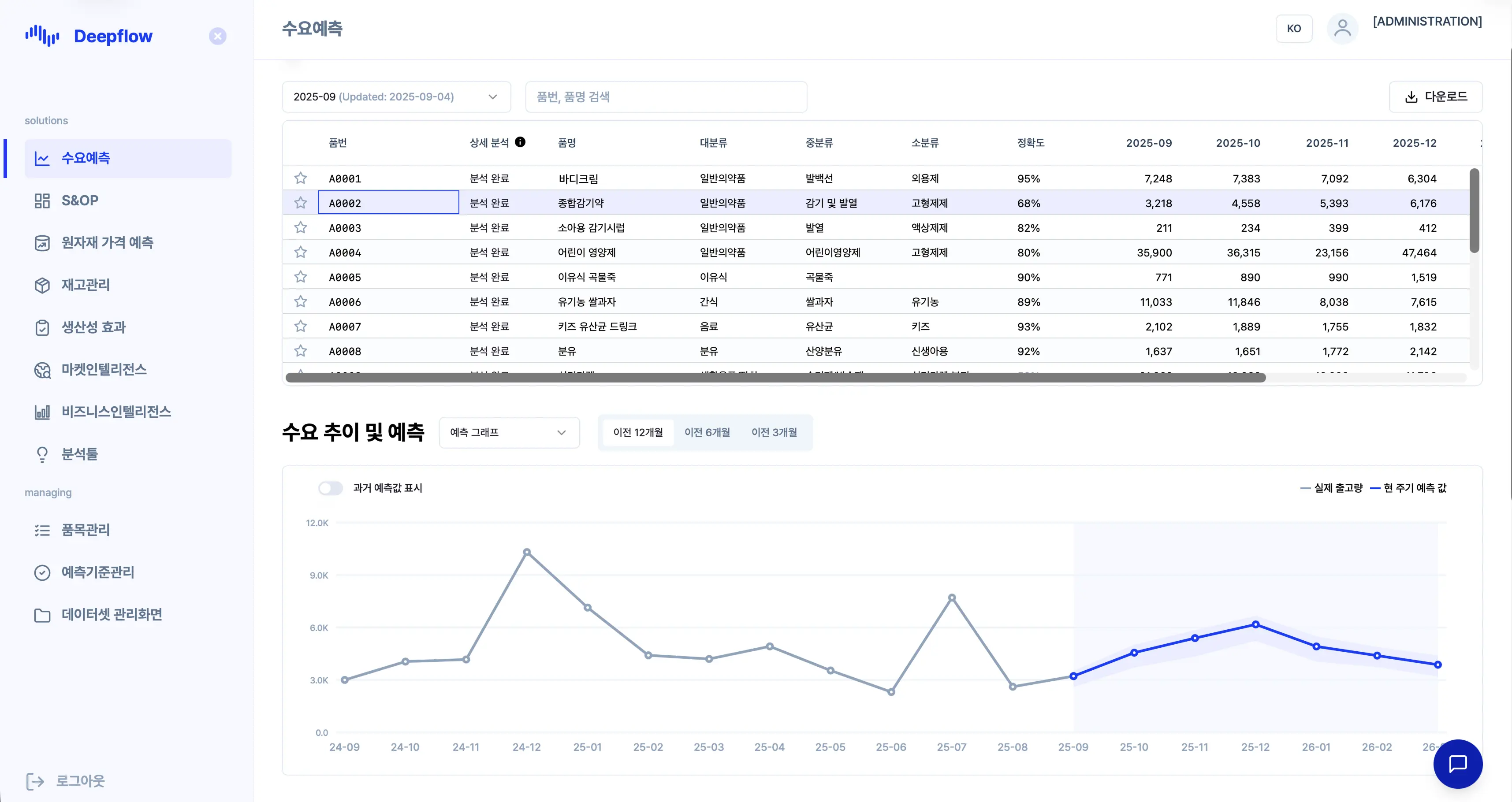
Deepflow is not another program for logging inbound and outbound movements. It is an AI demand forecasting solution that uses the sales and inventory data you have already accumulated to predict how much will sell and to support inventory decisions. It pulls sales and inventory data scattered across ERP, POS, e-commerce, and WMS systems, forecasts demand at the SKU, store, and channel level, and connects those forecasts to safety stock and reorder quantity recommendations.
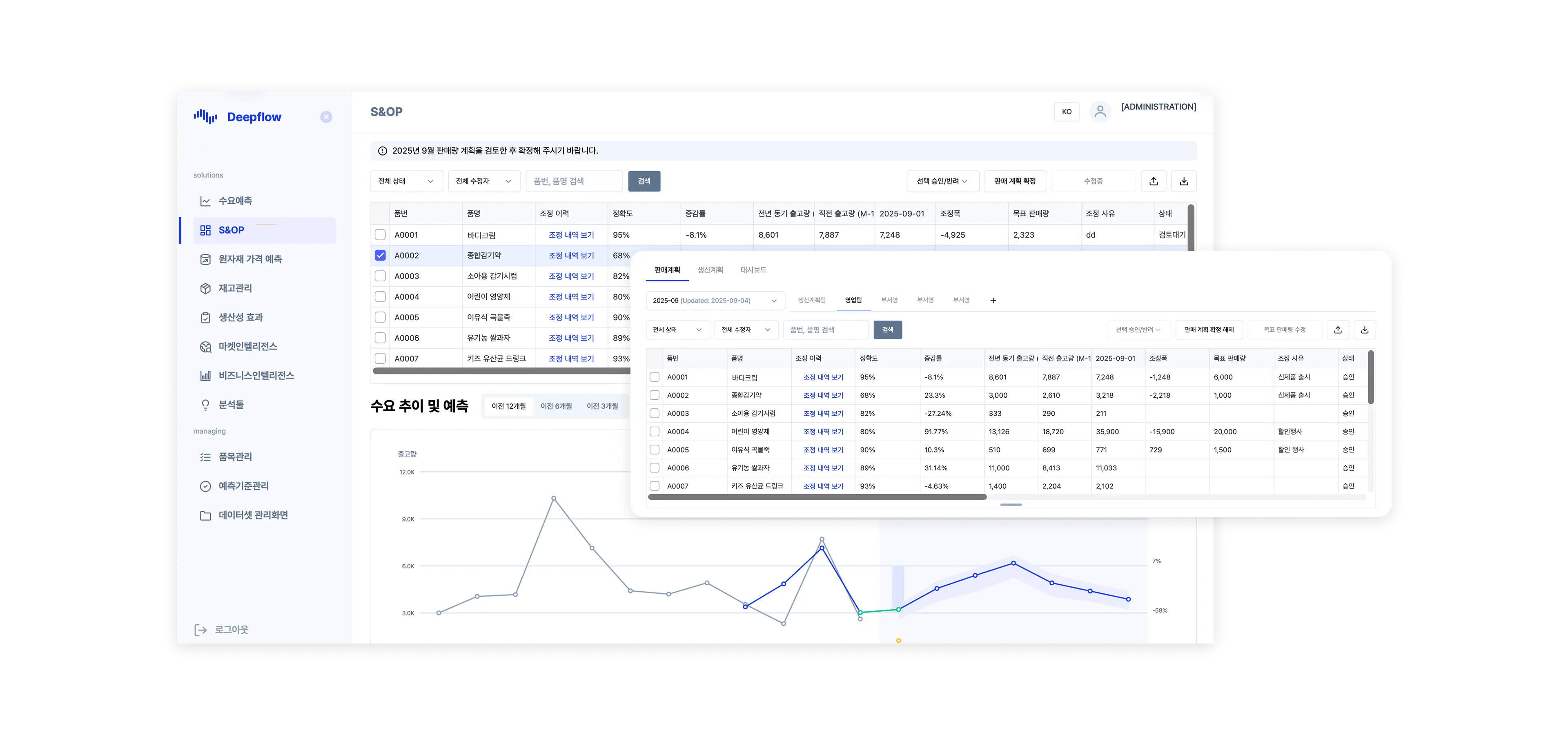
Deepflow does not stop at leaving the forecast in a report. It turns the manual monthly spreadsheet routine — last month's sales plus promotions plus gut feel — into reorder recommendations grounded in data. It adjusts forecasts for external variables such as promotion schedules and price changes, and flags in advance which SKUs are headed for a stockout and which are at risk of overstock. If your team already runs an ERP but forecast accuracy and reorder judgment are weak, you can approach it as a layer added on top of your existing systems rather than ripping anything out.
It fits distribution, retail, and manufacturing teams that have an ERP and POS but still depend on a planner's intuition for demand forecasting and target stock decisions. After adoption, it is worth tracking changes in stockout rate, inventory turns, and write-off rate together.
Oracle NetSuite: Finance and Inventory in One ERP
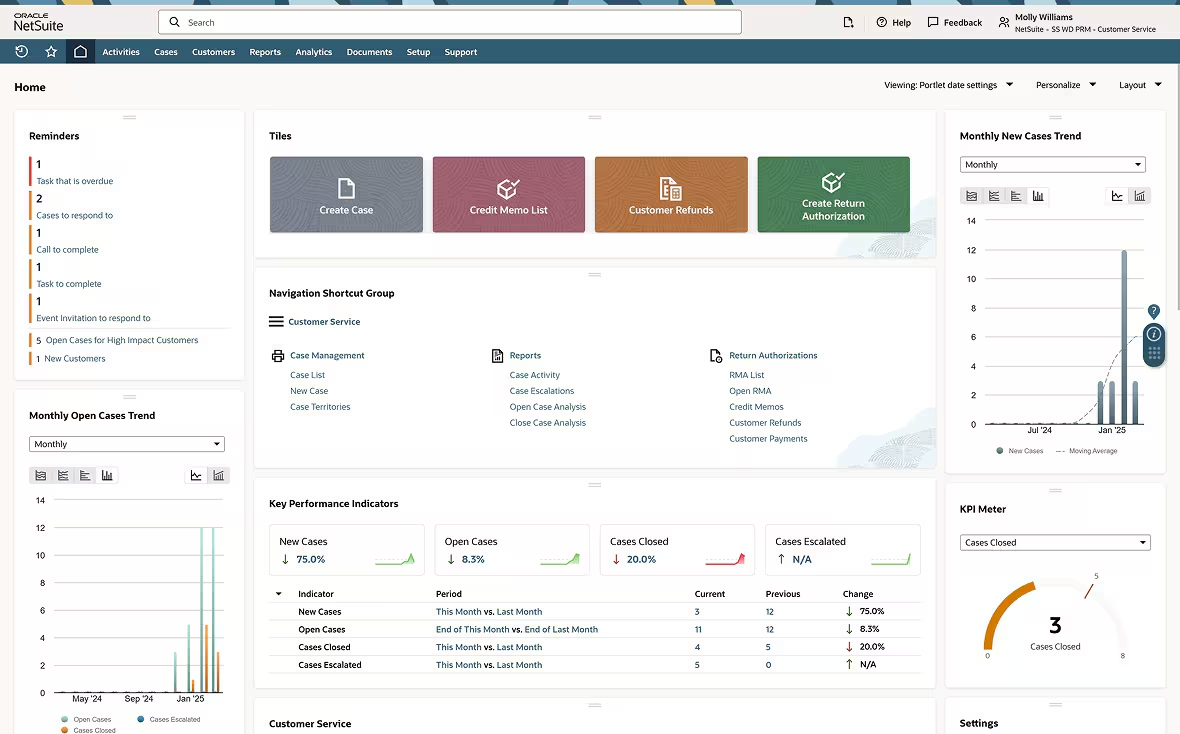
Oracle NetSuite is a cloud ERP that manages inventory in the same database as accounting, purchasing, and orders. It consolidates a view of inventory across multiple warehouses and channels and provides basic replenishment features as well. It is frequently evaluated by mid-sized and larger companies that want finance and inventory controlled in one system. Fine-grained demand forecasting, however, is an area that needs separate reinforcement.
Microsoft Dynamics 365 Supply Chain Management: End-to-End Supply Chain Visibility
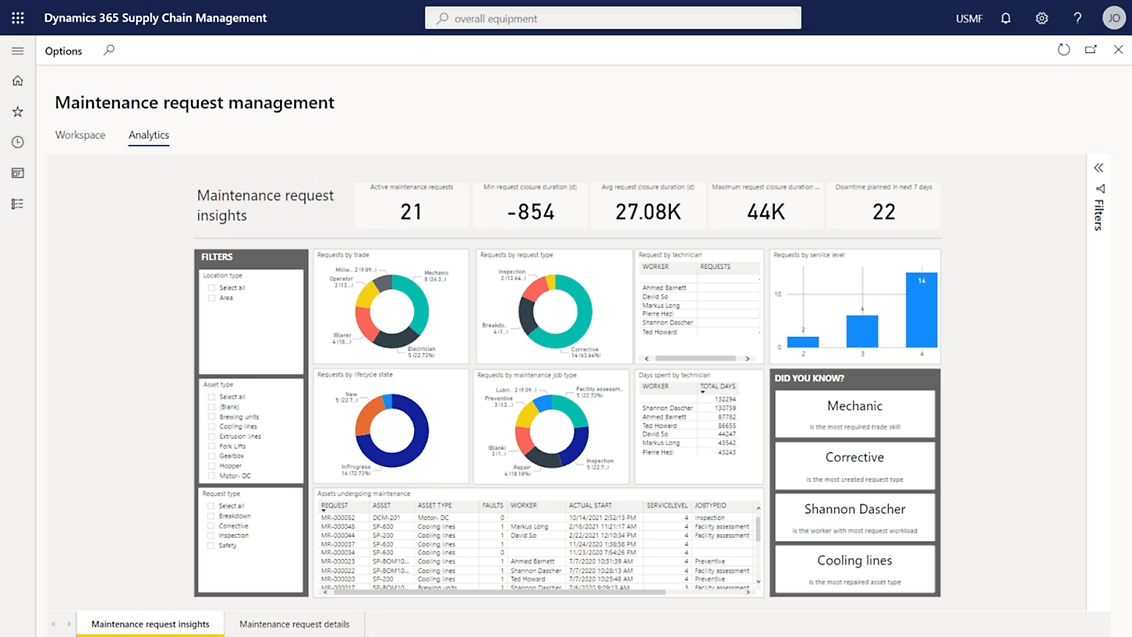
Microsoft Dynamics 365 Supply Chain Management reaches beyond inventory to cover the entire supply chain — production, warehousing, and logistics. It handles MRP- and BOM-based manufacturing planning together with warehouse operations, and connects naturally with the Microsoft ecosystem (Azure and Power Platform). It suits manufacturing and distribution organizations that are large and process-complex, and you should budget implementation difficulty and preparation time to match.
SAP S/4HANA and SAP EWM: Control for Complex Operations
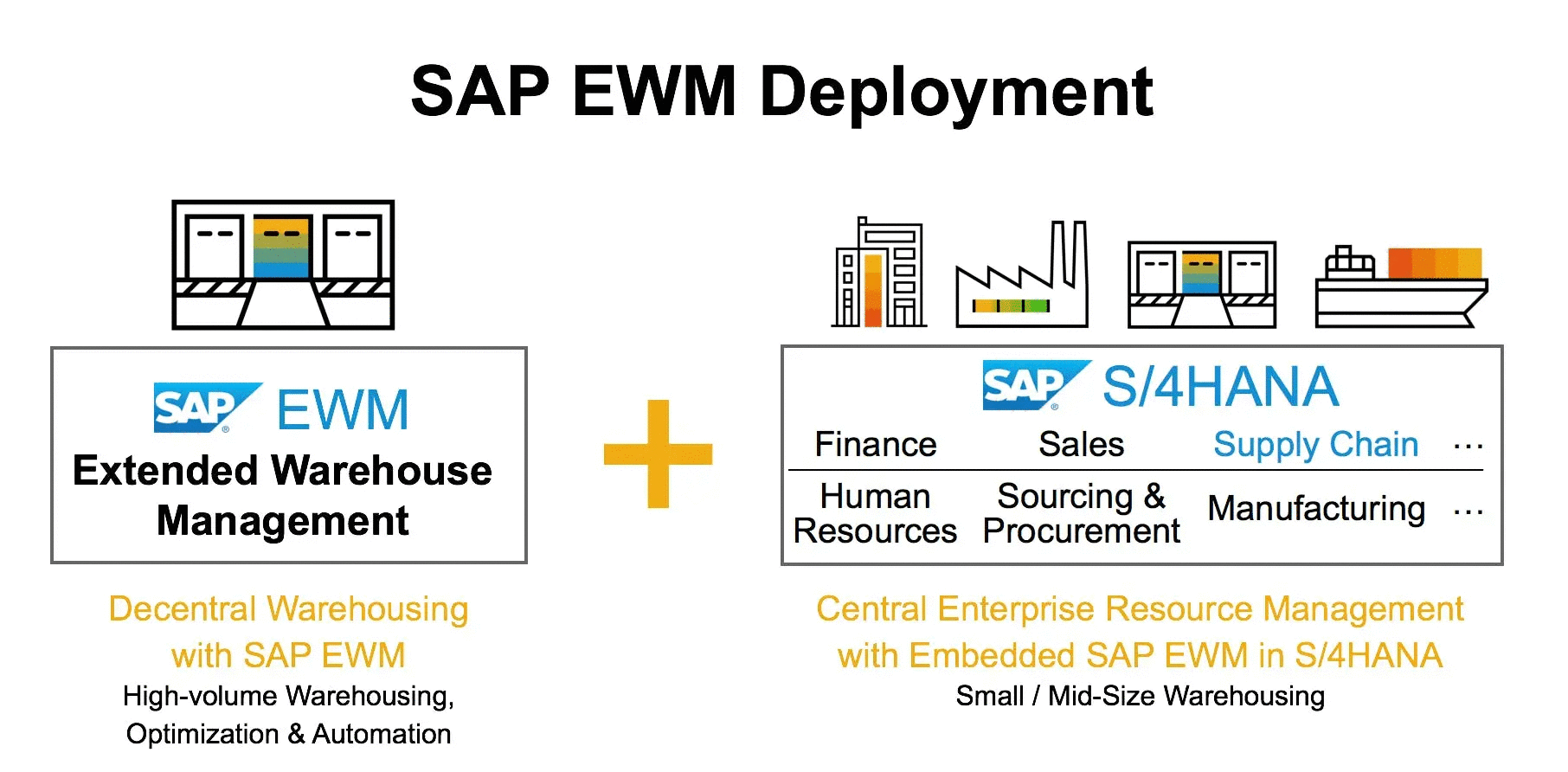
SAP S/4HANA is the flagship of large-enterprise ERP, integrating inventory, production, purchasing, and finance with precision. If warehouse operations are complex, SAP EWM (Extended Warehouse Management) adds fine-grained control over receiving, storage, picking, and shipping. It is strong for standardized, large-scale processes, but implementation and operations presuppose substantial resources and disciplined data preparation.
Odoo and Zoho Inventory: A Lighter Starting Point
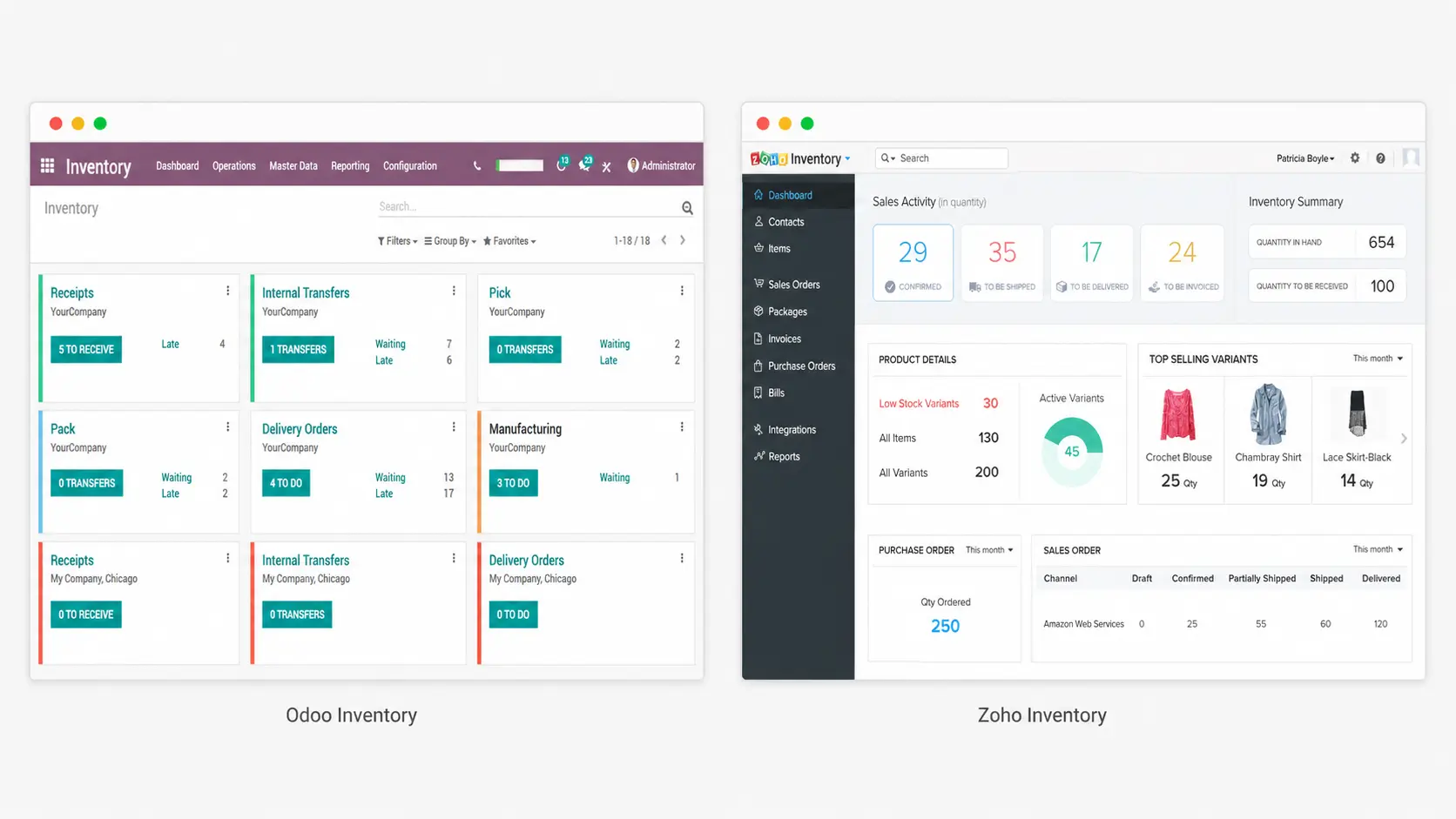
Odoo is an open, modular ERP that assembles inventory, purchasing, sales, and accounting from modules — its strength is the flexibility of switching on only what you need. Zoho Inventory manages multi-channel orders and stock with relatively little overhead, which suits companies centered on online sales. Both keep starting costs and barriers to entry low, but advanced demand forecasting is limited with the built-in features alone.
Cin7: Connecting Sales Channels and Inventory
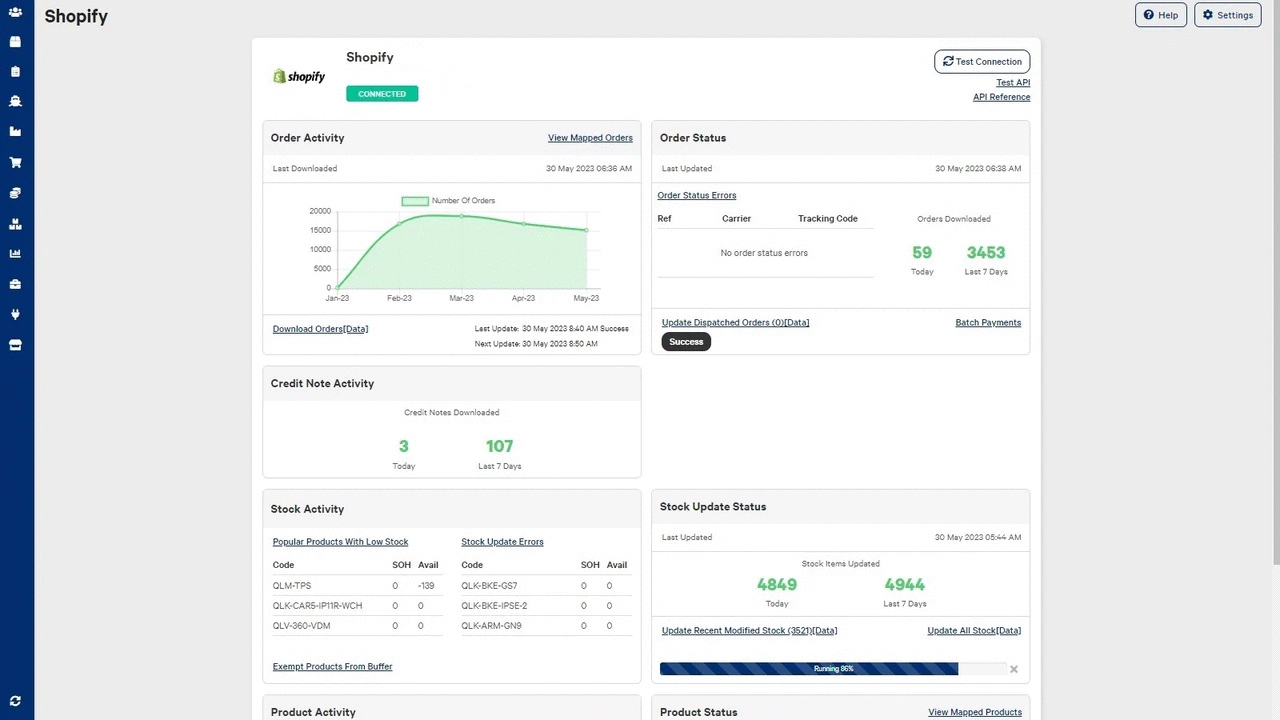
Cin7 focuses on connecting multiple sales channels, warehouses, and logistics so inventory can be managed in one place. It is frequently evaluated by distribution and retail teams that mix online and offline channels and need cross-channel inventory visibility.
Katana and Fishbowl: Linking Production and Inventory
Katana visually connects production and inventory for small and mid-sized manufacturers, handling BOM-based material planning and work orders. Fishbowl is strong in manufacturing and warehouse inventory management and is known for its integrations with QuickBooks and similar tools. Both fit manufacturers where the making process and inventory move together.
Local Inventory Tools for Korean Operations
Tools built for Korean tax, accounting, and commerce channels also deserve a place on the list. BoxHero is a light, intuitive barcode-based inventory app — a low-burden step for small teams just moving off spreadsheets. Ecount ERP and Eolmaeyo ERP are affordable ERPs that bundle accounting, purchasing, and inventory for Korean practice, with good accessibility on cost and on Korean commerce and tax integrations. Realistically, though, full-scale AI demand forecasting and inventory optimization is best treated as a separate layer for these tools as well.
Inventory Management Recommendations by Situation
Even the same tool can be the right or wrong answer depending on the problem your team is facing right now.
For companies managing inventory in Excel, trustworthy records come before forecasting — the next steps only carry meaning once the data is in order. For companies consolidating accounting, purchasing, and inventory, the ERP is the center. For companies with large warehouse errors, the first fix is a WMS to get work inside the warehouse under control, not a forecast. Conversely, for manufacturers and distributors with heavy stockout and overstock losses — and for companies that already have an ERP but weak forecasts — adding an inventory optimization layer that forecasts demand and recommends orders on top of the existing system tends to deliver returns faster than replacing that system.
AI Demand Forecasting and Inventory Optimization Checklist
More and more tools advertise demand forecasting, but whether they actually help with reorder decisions has to be checked separately:
- Do forecasts come out at the SKU, store, and channel level, not just as a grand total?
- Does it account for external variables such as promotions, price changes, and seasonality?
- Does it genuinely integrate with your ERP, POS, and sales data?
- Does it show improvements in stockout rate, inventory turns, and write-off rate as metrics — not just forecast accuracy?
- Can operators use it directly in day-to-day work through reorder recommendations, alerts, and dashboards?
- Does it go beyond the forecast to recommend the right order quantity?
A tool that only hands over forecast numbers hands the judgment right back to the planner. When forecasts flow into safety stock and reorder quantity recommendations, the monthly spreadsheet adjustments genuinely shrink.
Data to Prepare Before Implementing AI Inventory Optimization
The success or failure of AI demand forecasting and inventory optimization is often decided less by the tool itself than by the data that feeds it. The data does not have to be perfect, but before implementation you should confirm what you have and what is missing:
- Historical sales data — the more you can slice it by SKU, channel, and period, the better.
- On-hand and inbound/outbound records — including the gap between actual quantities and system quantities (inventory accuracy).
- Lead times — measured as the actual time from purchase order to receipt, per supplier.
- Promotion and price-change history — records of when, what, and how deep each discount was.
- Stockout history — used to read the missed demand that sales records alone cannot show.
- Write-off and returns data — clues for confirming overstock and quality problems.
- Inventory by store, warehouse, and channel — needed to see the distribution by location, not just the total.
Of these, stockout history is the data most often missing. Sales records alone read as "that is all that sold," while the demand you could not serve because the stock was gone stays hidden. Only when you look at this together do forecasts get close to reality.
Why Demand Forecasting and Inventory Optimization Matter in 2026
Counting current stock accurately is something most inventory management software now handles. The questions that remain are forecasting how much will sell and deciding where to hold how much. That is exactly why AI demand forecasting and inventory optimization belong in the criteria when you choose an inventory solution.
This is not to say you must replace the ERP or inventory software you use today. Rather, simply adding a layer that connects the sales and inventory data you have already accumulated to forecasts and reorder decisions can remove a large share of the agonizing that repeats in front of the month-end order sheet.
Deepflow is the AI inventory optimization solution for that layer. How much forecasting power your data can support, and what could improve in your current ordering process, can be reviewed first on the basis of the sales and inventory data you already hold.
Explore with ImpactiveAI how AI demand forecasting and inventory optimization could be applied on top of the ERP, POS, and WMS you use today and the data you already have.
.svg)


.svg)











%201.svg)
%202.svg)


.svg)