.svg)

.svg)
%202.svg)
%201.svg)
AI Energy Demand Forecasting: Shaping the Future of Smart Cities

Smart cities are no longer a distant vision of the future. They're a present reality rapidly taking shape in our daily lives. As cities worldwide accelerate their digital transformation, energy management has emerged as the defining factor in smart city success. Among the various technologies at play, AI-powered energy demand forecasting has become indispensable for smart grid operations, building-level energy efficiency optimization, and achieving carbon neutrality goals.
A 2025 study published in Nature examining the ORA-DL framework demonstrated the remarkable effectiveness of integrating deep learning with IoT sensing and real-time adaptive control. The research showed that deep learning models achieved 93.38% accuracy in energy demand forecasting while improving grid stability to 96.25% and reducing energy waste to just 12.96%.
The system also delivered a 15.22% improvement in efficiency through better resource allocation and cut operational costs by 22.96%. These results clearly outperformed traditional static models and simple heuristic approaches.
This research confirms that deep learning and hybrid AI models substantially reduce prediction errors and energy waste while maintaining stable energy management even during challenging peak load scenarios.
This article examines the specific ways AI-based energy demand forecasting is transforming urban energy systems in practice.
AI Demand Forecasting: The Foundation of Smart Grid Operations
Smart city power grids are evolving beyond centralized systems toward smart grids that combine distributed renewable energy with active demand management. Within this transformation, AI-powered demand forecasting has become essential for maintaining grid stability.
A 2025 study examining California Independent System Operator and European smart grids found that machine learning and deep learning models effectively addressed intermittency challenges in renewable energy. AI accurately predicted the variable output characteristics of solar and wind power, adjusting energy demand accordingly. This reduced reliance on fossil fuel backup generation.
The benefits of AI-based forecasting are equally evident in demand-side management. A 2024 smart grid load forecasting study showed that artificial neural network approaches achieved meaningful improvements in both root mean square error and mean absolute percentage error compared to traditional statistical models. This represents more than just improved prediction accuracy. It provides a stronger foundation for designing demand response programs and making better decisions about power infrastructure investments.
Smart meter and sensor data utilization continues to grow in importance. When AI analyzes real-time data collected from smart meters deployed throughout smart cities, highly precise load forecasting at the local level becomes possible. This enables practical implementation of dynamic pricing schemes and increasingly sophisticated demand response programs tailored to each district's characteristics.
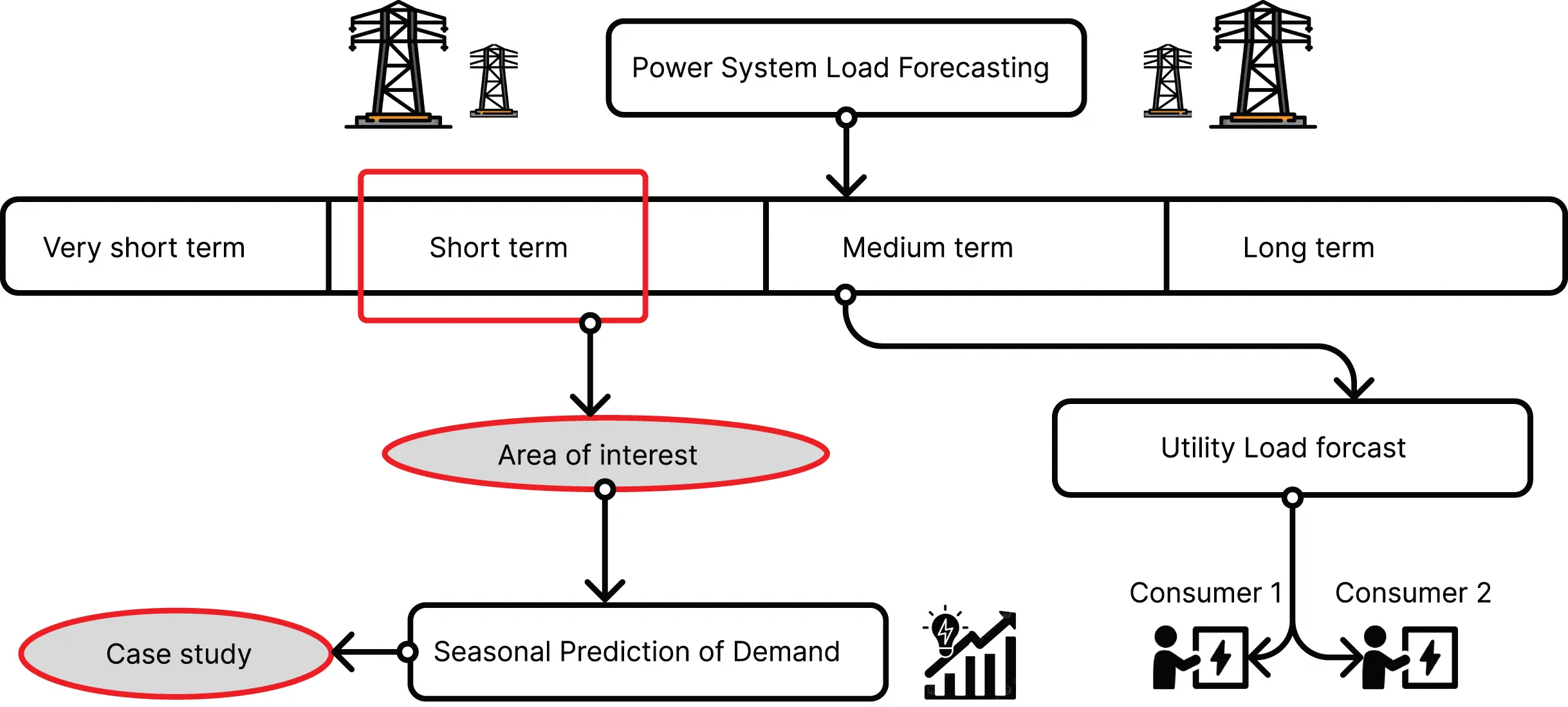
AI energy demand forecasting serves different purposes depending on the prediction horizon. Ultra-short-term forecasting (minutes to hours) supports real-time grid control. Short-term forecasting (day to week) informs daily operational planning and demand response program design. Medium-term forecasting (weeks to months) guides maintenance scheduling and seasonal response strategies. Long-term forecasting (years) shapes infrastructure investment and renewable energy integration planning.
Transforming Building and District-Level Energy Management
Building and district-level energy management represents a substantial portion of overall energy consumption in smart cities, offering significant efficiency opportunities. AI-powered energy demand forecasting is delivering meaningful results in this domain.
A 2025 IoT-based smart building framework study reported achieving approximately 93% accuracy in energy demand forecasting using deep learning models. Beyond high prediction accuracy, these results translated into reduced unnecessary energy consumption and improved grid stability. When AI adjusts building heating, cooling, lighting, and ventilation systems based on predicted demand, energy efficiency reaches its maximum potential.
The advantages of AI forecasting become particularly clear in large-scale facilities like campuses and cities. A 2024 smart city energy management system study found that LSTM-based load forecasting models successfully identified complex, highly variable energy consumption patterns. Even in situations where multiple buildings and facilities interconnect in complex ways, the system accurately predicted energy demand for each location, enabling schedule management that minimized overall system costs.
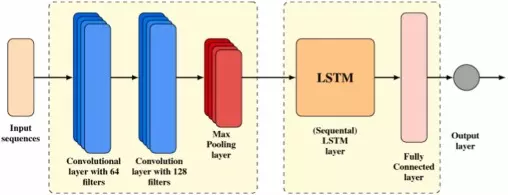
Recent development of hybrid deep learning models combining LSTM and CNN has shown significant advantages over baseline models in short-term load forecasting. This high prediction accuracy enables far more efficient operation of heating, ventilation, and air conditioning systems and energy storage devices, reducing building management costs while improving occupant comfort.
Edge AI and IoT-Based Real-Time Forecasting Systems
As smart city energy management advances, the limitations of centralized data processing have become increasingly apparent. Processing vast amounts of data from countless IoT sensors and devices in real-time with immediate response capability requires edge computing and distributed AI architectures.
A 2025 deep learning and IoT-based framework study achieved real-time load forecasting through a system combining edge and cloud computing. Results showed grid stability improved to over 96% while energy waste dropped to approximately 13%. These achievements became possible by processing data locally near its source rather than sending it to central servers.
Smart meter-based forecasting frameworks also merit attention. These systems apply federated learning and adaptive learning together to achieve more accurate forecasting at building and district levels while strengthening privacy protection and reducing communication loads. Each local node shares only learned model parameters, eliminating the need to transmit sensitive energy usage information externally.
Microgrids serve as core components of smart city energy systems. These small-scale independent power networks directly connect renewable energy generation with consumption sides, with central control centers using AI-based forecasting to coordinate both sides in real-time. The system predicts highly variable generation from wind and solar while analyzing demand patterns from local factories, commercial facilities, and buildings to maintain stable overall system operation.
This structure delivers two critical values. First, it maximizes renewable energy utilization while maintaining supply stability. Second, it reduces dependence on the main grid and distributes peak loads, improving overall grid efficiency.
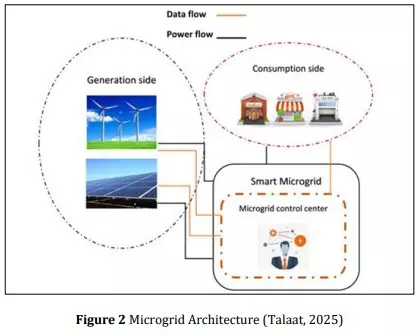
AI forecasting systems in microgrid environments play crucial roles. AI systems that simultaneously predict renewable energy generation and district-level demand optimize energy distribution within microgrids while reducing overall grid peak demand. This approach represents a core element of the modular distributed energy systems smart cities pursue.
Achieving Sustainability and Smart City Goals
AI-powered energy demand forecasting plays a substantial role in helping smart cities achieve environmental objectives. Accurate forecasting extends beyond operational efficiency to reducing carbon emissions and building sustainable cities.
A 2025 study on renewable energy-based grids reached similar conclusions. When AI predicts demand and generation, it reduces renewable energy curtailment and avoids unnecessary backup generation. This supports ESG goal achievement and naturally lowers smart city carbon emissions by maximizing renewable energy use while reducing fossil fuel dependence.
Clear benefits emerge in energy efficiency and cost reduction. Energy optimization systems used in smart cities demonstrate that AI forecasting reduces operational costs while enabling more efficient energy use. Time-of-use pricing systems that encourage electricity consumption during off-peak hours help distribute grid burden more evenly. This approach guides people to use more electricity when rates are lower.
Looking more broadly, a 2025 AI study on sustainable cities indicates that AI demand forecasting helps identify building energy waste and accurately determine urban infrastructure scale. It also strengthens urban resilience to handle sudden demand surges. These aspects show that AI-powered energy demand forecasting has evolved beyond a simple operational tool to become central to smart city energy strategy.
ImpactiveAI's Approach and the Potential of Energy Demand Forecasting
In smart city energy management, how forecasting results are applied in practice matters as much as prediction accuracy. ImpactiveAI's approach demonstrates clear potential in this regard.

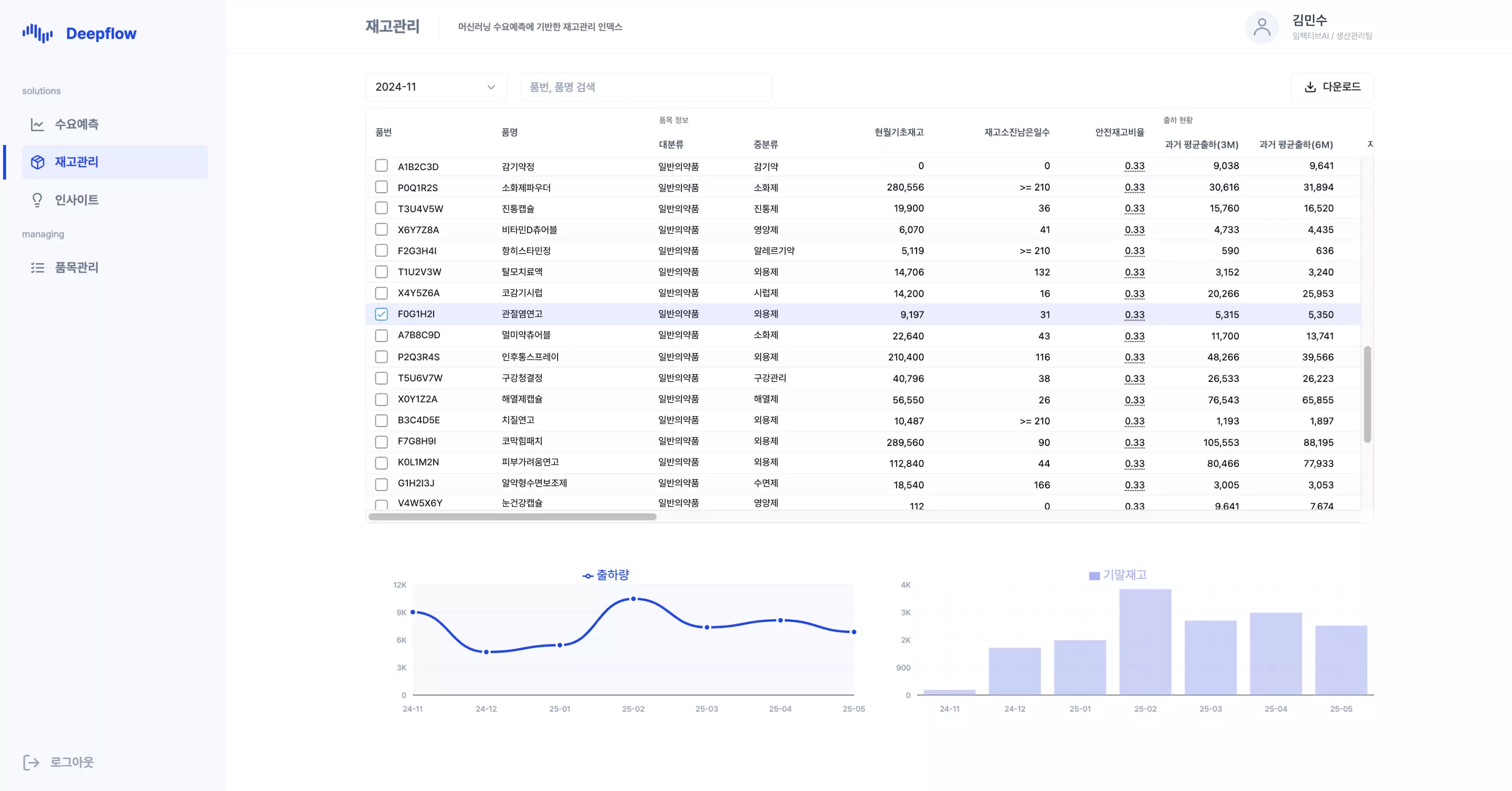
Deepflow performs forecasting across energy demand and various other domains based on 224 advanced deep learning and machine learning models plus 67 patented technologies. Rather than simply presenting numbers, the recently introduced LLM-based analysis feature provides both the rationale behind forecasting results and actionable insights ready for immediate implementation.
Analysis results are delivered as reports that carefully examine historical energy usage trends and seasonal patterns while clearly presenting the basis for future demand projections. The system automatically generates execution strategies tailored to each department's situation, whether energy management staff, facility operations teams, or policy decision-makers. This enables smart city managers to save time on complex data interpretation and report preparation, focusing instead on more critical strategic decisions.
The Deepflow implementation process begins with thorough analysis of each client's data characteristics and actual business environment. After reviewing current demand forecasting processes and establishing AI model objectives, customized modeling proceeds. The entire process receives support from data integration and inference pipeline construction through service delivery and continuous model refinement, optimizing resource management performance.
Future Challenges and Development Directions for Energy Demand Forecasting
AI-based energy demand forecasting demonstrates exceptional potential in smart cities, yet areas requiring further development remain. Major challenges identified in recent research illuminate the path forward.
First, model generalization and robustness present challenges. Much current research evaluates models using only specific regions or limited datasets, creating limitations in developing models that operate stably across diverse environments. Accurately forecasting sudden energy demand changes during extreme weather events like heat waves or cold snaps, or during policy changes and social issues, remains an important challenge. Future efforts must develop more robust models validated across multiple environments.
Data quality and privacy protection cannot be overlooked. As smart meter data-based forecasting research expands, the need grows for high-quality diverse data and privacy-preserving learning methods. Citywide system deployment requires privacy protection measures that give residents genuine peace of mind.
How well AI forecasting systems integrate with actual decision-making and control systems also presents an important challenge. For AI forecasting to deliver real value, results must naturally connect to actual management systems including demand response programs, energy storage device control, and grid operations, not merely produce forecasting outputs. The ultimate goal is integration throughout the entire energy management ecosystem.
Despite these remaining challenges, AI-powered energy demand forecasting has already established itself as indispensable core technology for smart grids, smart buildings, and urban energy systems. As smart cities build denser sensor networks, increase renewable energy usage, and strengthen digital control infrastructure, the role of AI demand forecasting will only expand.
For practitioners and decision-makers leading smart cities, AI-based energy demand forecasting is not optional but essential. Operating grids stably through accurate forecasting, improving energy efficiency, and achieving carbon neutrality goals—this represents the future that genuine smart cities must pursue.
.svg)


.svg)










%201.svg)
%202.svg)


.svg)